Life is what happens when you are making other plans~ John Lennon
An eye for an eye will make the whole world blind~Gandhi
The time is always right to do what is right~ Martin Luther King Jr.


Showing posts with label British history. Show all posts

Tuesday, December 9, 2025

The Kitchen Front by Jennifer Ryan

This book is a historical fiction novel set in WWII-era England. There are also real life recipes added in here, real WWII-era recipes from England. Some sound quite good, especially the dessert ones

Summary

-It's World War II and people are fighting all over the world. And right in England, rationing is the order of the day. Everyone is using ration coupons just to scrape by. When the BBC announces it's looking for a new co-host, a female cohost to help announce it's weekly radio program The Kitchen Front, four very different women enter, with the hopes they will win.

-For Audrey Landon, a widow whose husband died in combat, winning the competition would mean being able to pay all of her debts off and repair her house, so her and her three boys Alex, Ben and Christopher can live in a safe house

-For Zelda Dupont, a former haute cuisine chef, winning the competition would show the world a woman can be a chef instead of a lowly cook. It would also give her a life back after getting pregnant with an illegitimate child

-For Lady Gwendoline Strickland, a lady married to a wealthy aristocrat, winning the competition would show the world she can handle herself and carve her own path

-For Nell Brown, a house maid who also enjoys cooking, winning the competition would give her the chance to show the world her knowledge of cooking and allow her to escape her ungrateful employer, Lady Gwendoline

Friday, May 30, 2025

19 Historical Events You May or May Not Have Been Taught in School

History classes in school can only teach so much in a small amount of time. It's up to you to learn additional stuff, if you want to. According to MSN.com writer Aria Moore from the page Back in Time Today, here are 19 historical truths you may or may not have learned in school

1. The Tulsa Race Massacre (1921)

-Back in the past, it was not uncommon for cities to have segregated sections. White sections and black sections. Tulsa, Oklahoma was no different. A mob of white people had entered the predominantly black neighborhood of Greenwood in 1921. This region of town was known as the black Wall Street because of the many successful businesses there. This neighborhood was almost wiped off of the map, left a smoldering ruin. Hundreds of people were killed, thousands left homeless. This was considered to be a violent outburst of racial hatred and it was left out of history books for reasons that are unknown. The trauma stayed behind for years

2. The US invasion of the Philippines (1899-1902)

-Coming in hot on the heels of the Spanish-American War, the US entered another conflict. This involved the US laying claim to the Philippines, which didn't sit well with Filipino independence fighters. This war resulted in the death of hundreds of thousands of Filipino residents. Many people were left in the dark about the brutal tactics to win this war. It was a troubling sign of US expansion. It signals how things can look way one but actually happen another

3. Japanese American internment camps (1942-1945)

-Following the sneak attack bombing on Hawaiian naval base Pearl Harbor, over 120,000 people of Japanese origin or ancestry was sentenced to a "war relocation center", better known as internment camps. Places like Rohwer, Jerome, Minidoka, Heart Mountain, Tule Lake and most famously, Manzanar, were the places where these people of Japanese descent were sent. They were considered "enemy aliens" simply because they looked like the people who bombed Pearl Harbor. This unjust act was fueled by paranoia and also racism. Families were torn apart, forced to endure harsh conditions in these camps. They lived in a constant state of fear and discrimination in these camps. This dark time in history left a lasting scar. But, there was hope. Many of the internees showed they were truly patriotic and they were resilient

-And, a very interesting fact is that one of the most famous military units emerged out of the camps. The 442nd Regimental Combat Team, aka the 442, emerged from these camps. This military unit was comprised solely of Japanese men in the camps who wanted to prove they were loyal to the US. Their motto was "go for broke", a phrase they learned from Hawaiian Japanese they were with, who would gamble until there was nothing left. The 442 were the toughest fighters and they became known as the Purple Heart Battalion because of the high number of killed / wounded in action

4. The Wilmington Coup (1898)

-In Wilmington, North Carolina in 1898, a successful coup was mounted. White supremacists overthrew a biracially elected and also legal government. This led to the deaths of dozens of people. This coup was violent in nature and it shows clearly the lengths some will go to ensure a certain type of racial hierarchy. This short-lived biracial government had nothing more than hope for all races to work in harmony. The damage this event left has left an ugly stain and scar on the US democracy system and race relations. This scar took years to heal

5. The US government performing "redlining"

-"Redlining" is the process of marking clearly defined areas where certain minorities are not allowed to be. In the 20th century, federal housing was controlled by redlining. These practices are considered discriminatory, as it targeted black families, preventing them from owning a home. Maps would mark areas as "high risk", which kept investment low. This process of exclusion only highlighted racial discrimination, leaving a nasty scar behind that would take years to heal. Unfortunately, redlining seems to still exist today. It's visible in the many urban landscapes, showing up in the forms of education, health and overall economic concerns. One must understand the process of redlining to help address this concern

6. Operation Paperclip (post-WWII)

-When WWII ended, the US started Operation Paperclip. This operation consisted of recruiting over 1,600 Nazi scientists, including Werner von Braun. They helped contribute to scientific works and discoveries and even advanced technology. The recruitment of these individuals was controversial, at best, because of their past affiliations with the Nazi Germany government. This operation was designed to show that there were complexities in ethics and that they must be faced in pursuit of progress

7. The 1914 Ludlow Massacre

-The National Guard of Ludlow, Colorado attacked coal miners and their families who were striking for better conditions in 1914. This fight between the coal miners, their families and the National Guard resulted in dozens of deaths, including kids. The miners were requesting better working conditions and it was met not with better conditions, but with death, violence and destruction. This clearly shows the struggles of labor people had to contend with in the early 20th century. This resulted in better labor reform and showed that workers would fight for rights

8. The CIA playing an essential role in foreign events

-In the 20th century, the CIA has performed several missions overseas. Including Iran in 1953, Guatemala in 1954, Chile in 1973. These covert, black ops operations were performed with the intention of placing settlements who were favorable to interests in the US and destabilizing the local regions. This interference was created by Cold War politics. Meaning that strategic gains were prioritized over a country's leadership. These missions left a lasting mark on the nations entered, creating long-standing instability and obvious resentment towards foreign policy from the US

9. Boarding schools for Native Americans

-It's always been known that Native Americans would face discrimination. From the 1800s to the 20th century, the children of Native American people were forcibly taken from their homes and families and forced into boarding schools. This process was designed to erase their cultural traces from them, forcing these children to adopt Western values and practices and even language. This loss of heritage, identity and family bonds opened a deep wound in generations of families. This policy affected many, and understanding it today is key for healing

-Ironically, there was something similar to this done in Australia. Children of Aboriginal people were taken from their homes by Australian government and church officials. This was done with the hope of assimilating these children into white society. The children were denied access to the Aboriginal culture, language and heritage. These children taken from their homes would be referred to as "The Stolen Generations"

10. The Trail of Tears

-This aptly named trail was forcibly relocating Native Americans in the name of US expansion. This trail resulted in deaths from disease and starvation. This trail was a sign of US expansion, the government lacking any regard for the rights of indigenous people and sovereign nations in order to gain more land for white settlers

11. US getting involved in slavery after 1808

-There was a ban put into place in 1808 banning transatlantic slave trading. Unfortunately, slavery thrived in the US until 1865. The economy in the South lived on forced labor, supported by both political and economical reasons. This period shows the contradictions in the growing nation, fighting for freedom while also showing people as prisoners. The resilience of these enslaved people showed clearly and played a major role in their liberation

12. Deacons for Defense and Justice

-The Civil Rights era of the mid-20th century was a turning point for the rights of all. The 1950s and 1960s were a turbulent time. Civil Rights violations occurred with a frightening frequency. A group calling themselves the Deacons for Defense and Justice emerged. Initially formed to protect activists from violence from the Ku Klux Klan, this group consisted of armed African American people, they ensured safer marches, safer rallies, providing evidence that resistance could be done peacefully. Their story is one of a fight for civil rights, but done peacefully

13. COINTELPRO (1956-1971)

-The FBI launched a mission called COINTELPRO. This targeted civil rights and activist groups. These groups included the Black Panther Party, Martin Luther King Jr. The whole initiative behind this mission was to disrupt and even discredit these movements. It showed the lengths governments would go to to maintain control of the populations, even infringing on civil liberties. Because of the shadowy nature of this mission, it created greater scrutiny in the intelligence agencies and formed a growing distrust of governmental power

14. Repatriation of Mexico (1930s)

-The Great Depression hit people hard. No one had money or jobs. And it was not just the US that was affected. Many Mexicans and US-born Mexicans, over 1 million people, were deported or forced to leave the US. This mass flooding of people back to Mexico was fueled by scapegoating and discrimination. This was a dark episode in history, showing the recurring pattern of targeting certain ethnic minority groups during times of crisis. It's important to understand events such as these, so as to understand the social issues that happen in today's world

15. Anti-Chinese Violence and Exclusion Acts

-In the early 20th century, there was a law called the The Chinese Exclusion Act of 1882. This law banned the whole Chinese ethnic group from immigrating to the US. This led to massive violence against already established Chinese communities. While in the US, Chinese immigrants faced constant discrimination, yet they made huge contributions to US society. This exclusion act highlights the act of immigration policies deeply rooted in racial bias. Understanding this part of history helps one understand the continuing issues of racial / ethnic discrimination

16. The 1933 Business Plot

-A plot was created in 1933 by a group of wealthy businessmen to overthrow then President Franklin D. Roosevelt. A Marine General named Smedley Butler revealed the plot, which had come to be known as the Business Plot. Despite no one being prosecuted, this revealed tensions between the economic classes and governmental power. This is a strange, but curious part of history. It shows just what can happen when democracy is fragile and it's left with unchecked ambition

17. American Eugenics Movement

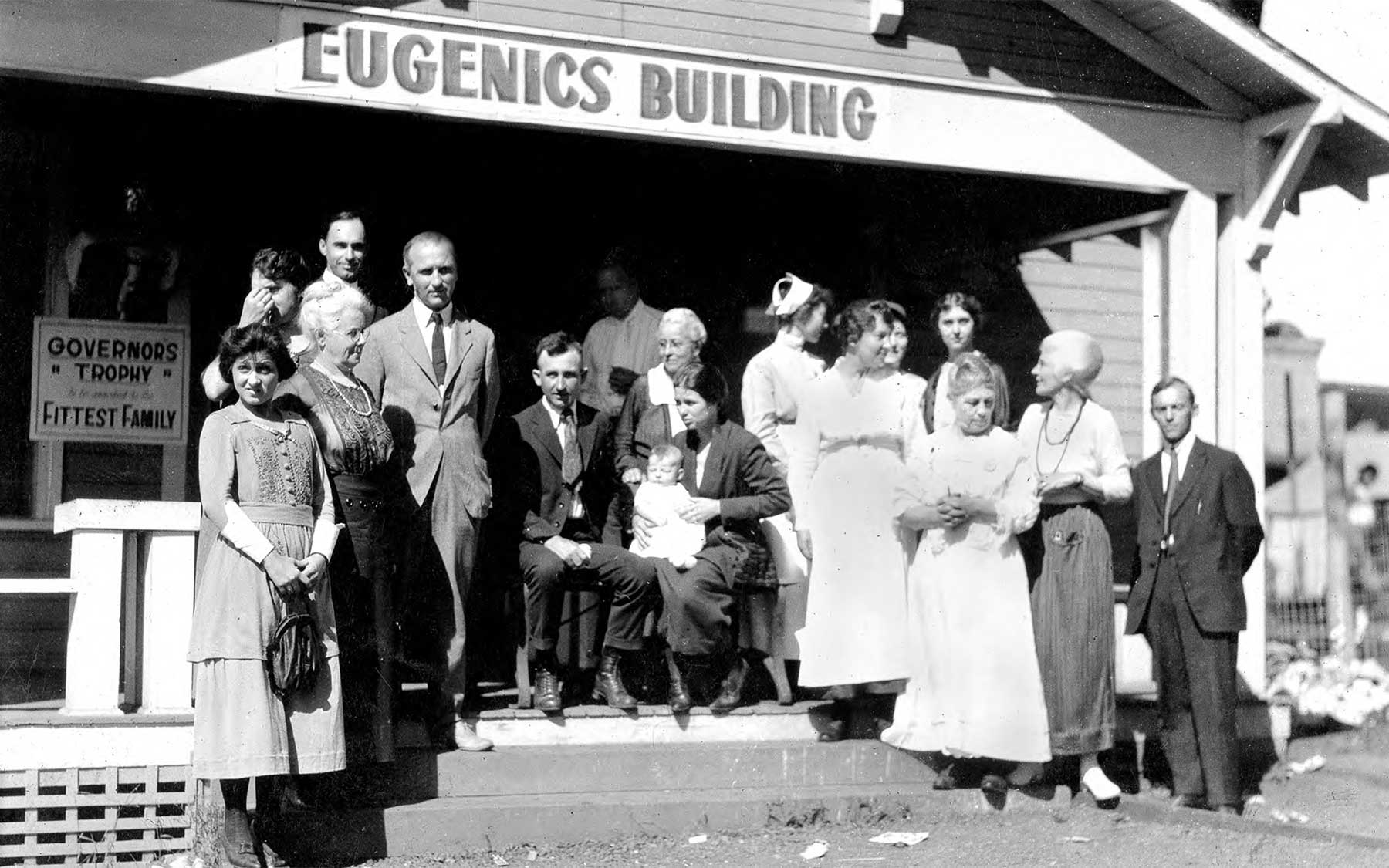
-Prior to Nazi Germany performing the act of "removing" any threat to the Master Race, as they called it, removing anyone they deemed "unfit for human life", the US had a sort of eugenics program running. The US would have forced sterilizations of those who were considered "unfit." This movement was rooted in scientific beliefs, seeking to control human reproduction. Policies unfairly targeted certain groups, reflecting barely hidden prejudices. This movement, inspired by Nazi ideologies, shows just how dangerous scientific abuse can be. Knowing this bit of history helps for understanding the debates on ethical research and genetics

18. The role slavery played in the American Revolution

-When Britain offered a friendly hand to enslaved people during the Revolutionary War, offering them freedom, this posed a massive threat to slaveholders. This offer made a major influence on the war, intensifying the fear of emancipation. Individuals who were enslaved were torn between the opposing sides. When one understands the difficult decisions to make in a time like that, it shows the contradictions one faces with the fight for independence

19. The actual effects of the GI Bill

-The GI Bill was a miracle for soldiers returning from WWII. This bill could allow a soldier to go to school if they wanted to. To buy a home. To do almost anything to make their life better after returning from combat. Unfortunately, the systematic racism meant the GI Bill was excluded from black veterans. These veterans were denied access to housing, educational opportunities. This inequality shows that it is important to guarantee that there is no reason why one group is allowed access to things while another is not, despite being in the same role. Understanding this is important for understanding the same opportunities for all veterans, no matter the skin color or race or ethnicity

Tuesday, August 20, 2024

American Tourists Love Visiting Britain

According to Microsoft channel The Telegraph UK, here are things American tourists love about Britain. Some are completely taken with the beauty of places like the Lake District, the quaint villages, the interesting markets held on weekends and more.

Earlier in the month, a writer named Sara Sherwood wrote an article that said American tourists found the UK "bland" and "barbaric". Complaining about everything, from the "stiff upper lip" mindset to the supposed inability to produce cold water. But asides from the crybabies who complain about this little historic region of the world, there are other Americans who are completely taken with everything this region has to offer.

There is more to the UK than the famous sites of London

-A reader, Graham Kirsch, shared a story of meeting a couple from South Carolina, who were on vacation, or holiday, as it's referred to in the UK. He explained "They had an interest in history and industrial heritage, so were visiting Cromford Mills in Derbyshire. They were knowledgeable, polite, interested and interesting. Plus, they understood that there is much more to the UK than just a few famous sites in London."

I have yet to find any pubs in the US that come close to the average British one

-A reader of Telegraph UK named Jonathan Lloyd states an expansion on the point made by Mr. Kirsch. He said "As an expat and dual citizen who has lived in the US for 45 years, I always tell my American friends to pick a few things they want to see in London, but then get on a train and go two hours in any direction (Bath, Brighton, Norfolk, Oxford) and visit the local area around those places. "As for pubs, I have yet to find any in the US that come close to an average British pub. I can think of five in Hertford that would put most US bars to shame."

Keep doing what you're doing my British friends

-Telegraph UK reader Rich Coo shared how, as an American citizen in his late 30s, the description of Britain being "bland" and "barbaric" "pains him a bit to read". He said "I've been to the UK many, many times for work and holiday. I love the country and have gained some really close friends there. Nothing beats sitting in a proper pub with real ale in hand. Don't change, keep doing what you're doing by British friends."

It saddens me to hear of the rampant illegal immigration

-Jenny Stewart, a reader of Telegraph, states "I am American and, as with most Americans I know, share a heritage with the UK. We love everything-well, nearly everything-about Britain." She goes on to say that it "saddens me to hear of the rampant illegal immigration; the undermining of your churches and culture; the high taxes trying to pay for it all. The United Kingdom is special. Protect it."

Americans go to the UK because they expect it to be different

-Laura McIntyre, a Telegraph reader, is another American citizen who visits the UK on a regular basis. She stated "Americans go to the UK because they expect it to be different than home, so why complain when they find that it is, indeed, different? That's silly."

If folks from the American heartland visited the British heartland they'd have a whale of a time

-An anonymous reader posted an interesting point. They stated that "the issue is the cost of travelling across the Atlantic, which means only elite Americans generally come here and it's London they visit, which clearly has its flaws. If the regular folks from the American heartland came here and visited the British heartland then I'm sure they'd have a whale of a time."

We are complete Anglophiles

-Sarah Ferrar, a reader of Telegraph UK, says she remembers a trip she took in the 1970s with her mother. "When I was 20 years old, my mother and I flew into Heathrow, rented an automobile and immediately left London and spent several weeks travelling around the British Isles - going up as far as Skye and far down as Bath. It was just lovely. In 2000, one of my daughters and I retraced that trip, although a bit modified. We are complete Anglophiles."

The weather is not a problem

-Another American reader of Telegraph UK is Carol Partridge. "I am an American and have never found a reason to complain about anything! The pubs are perfect for a nice glass of wine and a bite to eat. The weather is the weather and not a problem. My accommodations are comfortable, the Tube and buses get me wherever I need to go. If, when I visited, there is a strike, I rearrange plans (I get TFL emails, so I plan accordingly)."

England will always be my second home

-Telegraph reader Blair Nelsen talks about how he lived in Newmarket, Suffolk "for five years in the 1980s." He continued. "England, with all its charm, character and eccentricities, will always be my second home. Now, if only I could find a good ploughman's platter and a pint of bitter..."

Saturday, September 1, 2018

The Prisoner in the Castle by Susan Elia MacNeal (Maggie Hope series Book 8)

This is the eighth and final book in the Maggie Hope series
Summary
-World War II is heating up. Maggie Hope is a spy with too much knowledge. She knows too much for the British government to sit by idly. She knows where in France the Nazis are going to invade. Maggie is on a remote Scottish isle called Killoch Castle. Her fellow agents are dropping like flies. One even drops in the middle of his after-dinner drink, making his death just the first of many. Maggie must investigate before she herself becomes the next victim.

The Paris Spy by Susan Elia Macneal (Maggie Hope series Book 7)

This is the seventh installment of the Maggie Hope series
Summary
-Maggie Hope, now working for the Special Operations Executive as a spy, is once again on a new mission. She is travelling to the City of Lights, Paris, France. She has learned that her half-sister, Elise Hess, has been released from the all-female Ravensbruck camp, but has disappeared. In the meantime, she can investigate the disappearance and eventual capture of her fellow SOE agent Erica Calvert. She must keep her wits about her as she infiltrates the highest levels of Nazi security to root out a traitor, find her half-sister and find her fellow agent.

The Queen's Accomplice by Susan Elia Macneal (Maggie Hope series Book 6)

This is the sixth installment of the Maggie Hope series
Summary
-The Nazis may have taken a break from the relentless Blitz, but that does not stop London from getting trouble. A serial killer is stalking women who happen to be reporting for duty as Winston Churchill's spies and workers abroad. This killer is mutilating women in crimes mirroring, almost exactly, Jack the Ripper. The BBC news media is dubbing this killer "The Blackout Beast" because of his crimes occurring during the nightly blackouts. In order to catch this reclusive beast, Maggie decides to user herself as bait. With her flaming red hair, she will pose herself as Mary Jane Kelly, the last victim of Jack the Ripper.

Mr. Roosevelt's Confidante by Susan Elia Macneal (Maggie Hope series Book 5)

This is the fifth installment to the Maggie Hope series
Summary
-December, 1941. Pearl Harbor, the largest Navy base in Hawaii, has been sneak-bombed by the Japanese Imperial Navy. Lives are lost and at risk. Prime Minister Winston Churchill has arrived in the US to negotiate with then President Roosevelt about the US entering the war. Maggie poses as Churchill's typist, which she has great experience with and once again, gets wrapped up in a mystery.

-One of Mrs. Roosevelt's aides disappeared, only to turn up murdered in her apartment, her death made to look like a suicide and a note left behind blaming Mrs. Roosevelt for making inappropriate sexual advances. All of this to try and undermine the President and cost American support in the war.

Saturday, August 25, 2018

The Prime Minister's Secret Agent by Susan Elia Macneal (Maggie Hope series book 4)

This is the fourth installment of the Maggie Hope series
Summary
-Maggie is ready for some R&R. She finds that on a Scottish isle, home to the training camps which trained her for MI-5 work. Instead of rest and relaxation, she is, once again, drawn into a mystery. Three ballerinas, including one of Maggie's closest friends, Sarah Sanderson, fall victim to a mysterious illness which leaves oozing black blisters. As she investigates, it turns out that the oozing black blisters are a result of exposure to anthrax. She soon discovers that the Prime Minister is hoping to develop bioweapons to use against Britain's enemies. But taking attention away from this are the struggles in the Pacific with the Japanese.

His Majesty's Hope by Susan Elia Macneal (Maggie Hope series book 3)

This is the third installment of the Maggie Hope series
Summary
-After the events at Windsor Castle, Maggie is now working for a black ops operation called Special Operations Executive. This group helps the British war effort both at home and abroad. Her first mission is to go to Nazi-controlled Berlin, the very central command center of the Nazis and infiltrate the highest levels, collecting information and sending it back to London. She also comes across a secret that shocks her.

Princess Elizabeth's Spy by Susan Elia Macneal (Maggie Hope series Book 2)

This is the second installment of the Maggie Hope series by Susan Elia Macneal
Summary
-Maggie is back. This time she's completed her MI-5 spy training and is itching to put those skills to use. Much to her great disappointment, she will not be heading out on reconnaissance missions to collect intelligence for the British war effort. Instead, she's going undercover at Windsor Castle, to tutor the young Princess Elizabeth in math. The upstairs-downstairs Downton Abbey-style world of Windsor Castle proves much more dangerous than she thought as a murder is committed. This throws the whole royal family into disarray and she much race against the clock to protect both the royal family and England against a threat much larger than everything

Mr. Churchill's Secretary by Susan Elia Macneal (Maggie Hope series Book 1)

This is the first installment of a WWII-era spy series by Susan Elia Macneal
Summary
-Maggie Hope is not your average woman. British-born, American-raised and educated, she moves to England only to settle her late grandmother's estate. With her high level of education, she is only able to secure a job at 10 Downing Street, home to then British Prime Minister Winston Churchill as a typist, among his menagerie of cats. She's offered an opportunity to investigate the murder of a woman who worked in her position before her. As the investigation unfolds, it tells of an IRA plot to destroy England. After solving this case, she if offered the chance to undergo training for work at MI-5, or British Intelligence.

Thursday, August 23, 2018

New series of books

Lately, I've been consumed with two new series of books. The Harris Brothers series by Amy Daws on my Kindle and in paperback form the Maggie Hope series by Susan Elia MacNeal.

Normally, I wouldn't read romances, but for some reason, most of the romance stories I've been reading on my Kindle lately have had to involve soccer, London or a combination of both, like the below-mentioned Harris Brothers series. For some reason, romance stories involving soccer and London appeal to me! Not to mention there are probably tons of cute guys in London and England in general ;) ;) ;)

The shocking thing is that Amy Daws, who writes this soccer series, is American and found it extremely hard to write English characters. Luckily, in her acknowledgements at the end of each book, she mentions that people who work with her on the book, also friends of hers, are English and they ensure that everything is good to go in terms of English culture, such as how the characters would talk or react in certain situations. She says that she is obsessed with all things London and that is what inspired her incredibly gorgeous soccer playing brothers series

The Harris Brothers series
-The Harris Brothers series involves a band of soccer-playing brothers named Camden, Tanner, Booker and Gareth Harris. The younger of the three-Camden, Tanner, Booker- play for the fictional Bethnal Green FC football team at Tower Park while the oldest brother, Gareth, plays for Manchester United FC
-There are five books in this series. Each one surrounding a different Harris Brother
1. Challenge-Camden Harris and Indie Porter
2. Endurance-Tanner Harris and Belle Ryan
3. Keeper-Booker Harris and Poppy McAdams
4. Surrender-Gareth Harris and Sloan Montgomery
5. Dominate-Sloan and Gareth

The Maggie Hope series
-The Maggie Hope series is a WWII-era spy series that takes place in London during WWII. It involves a woman named Maggie Hope, British-born, raised in America and recently transplanted back in England. She starts out working as a typist for then British prime minister Winston Churchill. But then is offered the chance to work for MI-5 as a spy.
-There are eight books in this series
1. Mr. Churchill's Secretary
2. Princess Elizabeth's Spy
3. His Majesty's Hope
4. The Prime Minister's Secret Agent
5. Mrs. Roosevelt's Confidante
6. The Queen's Accomplice
7. The Paris Spy
8. The Prisoner in the Castle

Wednesday, July 4, 2018

Stalking Jack the Ripper by Kerri Maniscalco

For those interested in historical fiction, specifically Victorian England-era, you might like this story, despite the fact that it is targeted to teens. Sometimes teen stories like this are pretty good. This story is especially good if you are interested in the famous Jack the Ripper history
Summary
-Audrey Rose Wadsworth is not your typical Victorian society girl. Born in to money because of her father being a lord, she has to appear like your normal society girl-afternoon teas and luncheons, etiquette lessons from her Aunt Amelia, fittings and shopping for new dresses and shoes, etc. But she leads a secret life. Her uncle is a forensic scientist and she harbors the same interest in forensic science and medicine, despite everyone's beliefs that a woman's place is running a good household. She will often sneak away to her uncle's laboratory to study the dead-perfecting her autopsy techniques, studying the cause of death, testing theories about cause of death and more. Her work will drag her into the case of the legendary Jack the Ripper, a Victorian England-era serial killer with no known motive who stalked the East End London neighborhood of Whitechapel, killing prostitutes. Together with medical student Thomas Cresswell and her uncle, these three, along with Scotland Yard, will attempt to unmask this mysterious killer.

Thursday, December 21, 2017

Titanic (1997)

This movie is about the famous Titanic, a British passenger ship that went down in the North Atlantic on April 14, 1912 on its maiden voyage from Southampton, England to New York.

Summary
-Rose Dewitt Bukater is a socialite boarding the RMS Titanic with her mother, Ruth and fiancée Caledon Hockley. American artist Jack Dawson and his Italian friend Fabrizio De Rossi win third-class tickets to the ship. As the ship makes its maiden voyage toward its then-unknown doom in the North Atlantic, Rose and Jack fall for each other aboard the ship.


Cast
-Leonardo DiCaprio: Jack Dawson
-Kate Winslet: Rose Dewitt Bukater
-Billy Zane: Caledon "Cal" Hockley
-Kathy Bates: Molly Brown
-Frances Fisher: Ruth Dewitt Bukater
-Gloria Stuart: Old Rose
-Bill Paxton: Brock Lovett
-Bernard Hill: Captain Smith
-David Warner: Spicer Lovejoy
-Victor Garber: Thomas Andrews
-Jonathan Hyde: Bruce Ismay
-Danny Nucci: Fabrizio
-Ioan Gruffudd: Fifth Officer Lowe

Did You Know?
-During the scene where the ship is sinking and its passengers are being shown either leaving or resigning to their fate, the older couple seen hugging each other while laying in the bed despite the rising flood waters were Ida and Isidor Straus, both of whom died on the Titanic and both of whom were the owners of Macy's department store.
-When Kate Winslet discovered she had to be naked in front of Leonardo DiCaprio in one scene, she decided to get herself prepared for the scene, so she flashed him
-Unintentionally, the scenes set in 1912, except for the modern-day scenes, opening/closing credits, lasted a total of two hours and forty minutes, the exact amount of time it took for the Titanic to sink to the bottom of the North Atlantic. In the movie, the scene where the Titanic collides with the iceberg took only 37 seconds, the same amount of time that the real Titanic took to collide with the iceberg
-When Leonardo DiCaprio is seen sketching Rose, the hands seen are not his, but director James Cameron. James Cameron is left handed and used mirror-imaging on the sketching shots to appear right-handed, like DiCaprio
-When Cal and Rose are having morning coffee and Cal flips the table from a tantrum, Billy Zane ad-libbed that and Kate Winslet's reactions were genuine.
-Gloria Stuart, who played Rose later in life, was nominated for Best Supporting Actress at 87
-Gloria Stuart was aged by makeup to give the impression she was 100 years old. She didn't like this. Gloria died in 2010 at the age of 100
-Millvina Dean, an actual survivor of the Titanic, was asked to come to the premier. But found that watching  the 1958 film A Night to Remember was hard enough
-To create the eerie post-sinking effects of frostbitten victims, the scenes were shot in a 350,000 gallon tank and the people playing the victims had a special powder applied to their faces that crystallized when exposed to water to make them look frostbitten. Wax was applied to their clothes and hair to give the impression of being in the water.
-In Nova Scotia, on the final night of shooting, a bunch of pranksters had slipped angel dust into the clam chowder served to the cast and crew. 80 people fell ill, more than 50 were taken to the hospital. When James Cameron realized what was happening, he forced himself to vomit before the drug took effect. The people responsible were never caught
-When Rose goes down into the passageways looking for Jack, the water filling the halls was from the Pacific Ocean, at the Baja California, Mexico set. The water was really frigid and when Kate steps into it, her reaction to the cold water and gasping at it was real
-Harland and Wolff, the shipyard in Belfast, Ireland, who built the Titanic, opened up their archives to be used in production
-The ocean into which passengers were jumping from the sinking ship was only 3 feet deep
-Kate Winslet has no problem with nudity so she didn't need a body double
-After spending hours in cold water, many cast members came down with colds, flu, or kidney infections, including Kate Winslet
-The décor on the ship was reconstructed by or under supervision by researchers of the White Star Line, the company who owned and designed the Titanic
-Shay Duffin, who played the English barkeep in the movie, is related to one of the Irish workers who helped to build the Titanic
-Some of the actresses who auditioned for the role of Rose include: Christina Applegate, Jennifer Aniston, Angelina Jolie, Geena Davis, Penelope Ann Miller, Reese Witherspoon, Milla Jovovich, Emily Mortimer, Thandie Newton, Christina Ricci, Joely Richardson, Gweneth Paltrow, Sharon Stone, Charlize Theron, Rachel Weisz
-The band playing at the party in the 3rd class deck is Gaelic Storm
-Tom Wilkinson was the original choice to play Spicer Lovejoy, but instead the role went to David Warner. Later on, Tom Wilkinson would go on to star in The Full Monty, one of the main rivals for Titanic at the Oscars that year
-When Jack meets Rose on the Grand Staircase, the clock behind them reads 2:20, the time the ship sank in real life

Tuesday, October 1, 2013

Historic events in October

History

10/1/1946: 12 members of the Nazi Party are tried and sentenced to death at the International War Crimes Tribunal inn Nuremburg, Germany
10/1/1908: Henry Ford's "Model T" goes on sale for the first time


10/2/1967: Thurgood Marshall becomes the first black associate justice of the U.S. Supreme Court
10/3/1974: Frank Robinson becomes the first black baseball player to be hired by the Cleveland Indians
10/4/1957: The "Space Age" begins as the Russians launch their satellite, Sputnik, into space.
10/6/1927: The first "talkie" film debuted in New York. The Jazz Singer starring Al Jolson was the first film using spoken dialogue
10/6/1846: George Westinghouse is born. He is an engineer and inventor, responsible for creating air brakes for trains and adoption of alternating current (AC) systems for electric power transmission
10/8/1871: The Great Fire of Chicago. Over 300 people were killed, 90,000 were left homeless
10/8/1993: Apartheid ends in South Africa. Economic sanctions against South Africa following the end of apartheid are lifted
10/9/1962: After 70 years of British rule, Uganda gets its independence
10/9/1940: Beatle member John Lennon is born in Liverpool, England. He was tragically murdered by a crazed fan in New York on 12/8/1980


10/14/1964: Dr. Martin Luther King Jr. becomes the youngest recipient of the Nobel Peace Prize. He donated the $54,000 to the Civil Rights Movement
10/15/1946: Nazi leader Hermann Goering committed suicide in his Nuremburg prison cell by swallowing a cyanide pill hours before his hanging for war crimes
10/16/1916: the first birth control clinic opens in Brooklyn, N.Y. by Margaret Sanger, a nurse who worked among the people on the Lower East Side
10/18/1945: "The Nuremburg Trials" begin with indictments against 24 former Nazi leaders including Hermann Goering and Albert Speer. This trial lasted 10 months, with the final verdict landing on Oct. 1, 1946. Twelve Nazis were sentenced to death by hanging, three to life imprisonment,  four to lesser terms, three were acquitted
10/19/1960: The US puts an embargo on Cuba, as the State Department banned all shipments from Cuba except food and medicine
10/19/1987: "Black Monday". The Wall Street stocks plunged 508 points, the largest one day drop in history
10/21/1967: largest anti-War protest in history. Thousands of anti-war protesters stormed the Pentagon during a protest against Vietnam. 250 were arrested. No shots were fired, but protesters were bit with nightsticks and rifle butts
10/24/1931: Chicago gangster Al "Scarface" Capone was sentenced to 11 years in prison for federal income tax evasion. In 1934, he was transferred to Alcatraz Prison in San Francisco. He received parole in 1939, during which, he was suffering from syphilis. He retired to his mansion in Miami Beach, where he died in 1947
10/26/1881: the famous "Shootout at the O.K. Corral" happens in Tombstone, Arizona. The shootout occurs between the Clanton and Earp families. Wyatt Earp, two of his brothers, and "Doc" Holliday, gunned down two members of the Clanton family and two others
10/28/1846: the ever famous "Donner Party". The group had 90 people in it, consisting of immigrants, families, businessmen, led by George and Jacob Donner. They became stranded in the Sierra mountains during a bad snowstorm and had to result to cannibalism to survive. There were just 48 people that survived
10/28/1919: The Volstead Act is passed. During Prohibition, drinks that contained more than one half of 1% alcohol was considered illegal. Called a "noble experiment" by Herbert Hoover, prohibition lasted 14 years and became the main source of profit for organized crime, which manufactured and sold the liquor they made in illegal bars or speakeasies
10/28/1914: Dr. Jonas Salk is born. He is a scientist who discovered a cure for the dreaded childhood disease polio. His vaccine reduced polio deaths in the U.S. by 95%
10/30/1990: The "Chunnel" is built. Connecting Great Britain to Europe, this underwater tunnel, which goes underneath the English Channel, allows people from England to go to Europe as well as the other way around
10/31/1941: Mount Rushmore is finished
10/31/1952: The U.S. tested its first hydrogen bomb at the Elugelab Atoll in the Pacific Marshall Islands