When Hollywood makes a war movie, they sometimes tend to gloss over actual historical details in lieu of entertainment value. That means they neglect to make the event actually realistic. There's a massive world of difference between Hollywood's version of WWII and the actual reality of what happened. And some people believe what they see on the big screen. Here are 30 WWII myths Hollywood had people believing, as per the MSN.com page Back in Time Today and writer Ella Brown
1. The US won the war almost single handedly
-Hollywood will show the US as being the primary winners of the second World War. Films like Saving Private Ryan or Band of Brothers. This view overshadows and totally neglects the efforts contributed by other countries. The Soviet Union played an important role. They bore most of the aggression from the Germans, most of the casualties occurring on the Russian Front, where no German soldier wanted to go. The UK and other Commonwealth troops, along with resistance movements, made a substantial impact
2. D-Day was all American
-Hollywood likes to create the impression it was only US-based troops who invaded on D-Day. This is simply not the case. Among the US troops, there were British, Canadian and Free French soldiers who stormed the beaches. They all, together faced resistance from the enemy holding the beach practically hostage. The unified work of all the various soldiers contributed a massive impact to the success of the landing
3. All Germans were fanatical supporters of the Nazi Party
-Once again, Hollywood has gotten it wrong. Any person who wore a German military uniform was not a fanatical supporter of the Nazi Party. Hollywood makes it out to seem that German soldiers were fanatical SS officers or ruthless, cold blooded Nazis. Many soldiers who joined the German military did so under duress or under conscription. Many who joined lacked support for Nazi ideology. Many of them simply wanted to serve their country with no intention of supporting the Nazi Party. Some deserted or resisted, which led to severe consequences
4. The French Resistance was everywhere
-France had come under the control of the Germans during WWII. Hollywood would have everyone believing that French Resistance groups were everywhere. While Hollywood films like Casablanca had everyone believing France was teeming with resistance groups, in reality it was not like that. Only 2% of the French population participated in these resistance movements, while another massive percentage of the population was simply enduring what they had to during the occupation
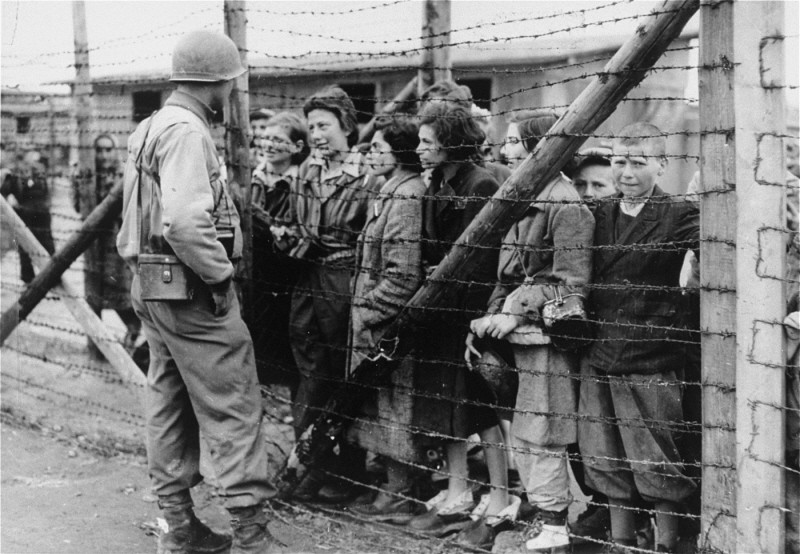
5. Americans Alone Liberated the Concentration Camps
-Once again, Hollywood had gotten it wrong just for entertainment value. Films such as Schindler's List, Band of Brothers often show just Americans as being the lone liberators of concentration camps. This is simply not the case and is a very limited point of view. In reality, Soviet soldiers liberated Auschwitz in January 1945. British soldiers liberated Bergen-Belsen. The efforts were that of the Allies, along with other nations making their contribution. The US did liberate some of the camps. They are Buchenwald, Dachau, Ohrdruf, Mauthausen, Dora-Mittelbau and Flossenburg. It's incredibly narrow minded to think that only Americans liberated the people from these factories of death, when in reality it was a multi-country effort to perform this humanitarian mission
6. Tanks exploded instantly
-Films like Fury show tanks as nothing more than death traps that will explode at the least little trigger. This is misleading. In reality, tank crews could take direct hits, as they designed with bulletproof armor plating. The casualties that occurred were from crews abandoning tanks under fire, not from explosives. This idea creates a false sense or knowledge about tanks. This leads people to thinking they were death traps rather than protective devices. This almost hides from view the strategic efforts and valiant bravery of their crews
7. The Japanese were all believers in being kamikazes
-Hollywood loves its war films. Films like Pearl Harbor and Iwo Jima show Japanese as fanatical kamikazes looking to take to the skies and take out enemy soldiers, sacrificing their lives in the name of patriotism. This is incorrect. Despite kamikaze attacks actually happening, they were more of a desperate measure. Many Japanese soldiers chose to surrender when and if possible, with a range of motivations. This "kamikaze" myth paints a rather bad picture of Japanese soldiers, not taking into account the complexities of their choices and experiences during war time
8. The Enigma Code was Cracked by Americans
-The 2014 film The Imitation Game starring Benedict Cumberbatch puts a spotlight on the important role Alan Turing performed during WWII. Unfortunately, films from the US often put, into shadow, the contributions Britain made to the war effort. The team at Bletchley Park was incredibly important. The US involvement came later, building upon already established information. The idea that the Americans were successful in breaking the Enigma Code is false. The British had already made scores of discoveries in breaking the Enigma Code before the Americans came in
.jpg) |
| Alan Turing |
 |
| Bletchley Park |
9. Machine Guns Fired Endlessly Without Reloading
-Hollywood makes it seem like machine guns can fire endlessly without reloading, overheating and mowing down enemies. In the land of reality, machine guns did fire, but not repeatedly. They quickly overheated, required frequent reloads on ammo and frequent barrel changes. Careful management and teamwork is what proved to be effective for operational efficiency. The myth that machine guns fire endlessly diminishes the challenges the soldiers faced, especially when using them under enemy fire or duress
10. The Allies were "The Good Guys"
-In war films from Hollywood, the Allies were always portrayed as being the heroes, the good guys. While they did oppose tyranny, and they did fight other evil acts, not all acts performed by the Allies were so noble of heart. The Allies did have some skeletons in their closet that eventually saw the light of day. US internment camps for those deemed "enemy aliens", the bombing of Dresden by the British. When you take into account some of these darker acts, it adds to your understanding of WWII. It gives more depth to the actions performed during war time and highlights the troubled complexities often neglected in war films
11. The Nazis were Efficient
-Raiders of the Lost Ark, for example, show Nazi officers as being efficient soldiers, executing plans with top notch precision. This is heavily misleading. In the land of reality, Nazi-related logistics had chaos in them. Troops who were ill-equipped for cold weather battle suffered from mismanagement and lack of supplies in the Russian winters. When these real facts are clearly understood, it paints a more effective picture of the Nazi war machine, defeating the idea that they were incredibly efficient
12. Pearl Harbor Was a Surprise Attack
-The film Pearl Harbor shows the bombing on the naval base in Hawaii as a complete surprise. In fact, in reality, it was not a complete surprise. US-based intelligence groups had gotten information suggesting there was to be an imminent attack by the Japanese, but responsible actions had not been executed in time. Preventative measures had not been taken in enough time. This shows that when total surprise comes out over failures in intelligence, the following actions and complexities along with them could have altered history
13. Deep Snow was what The Battle of the Bulge was fought in
-Films like The Battle of the Bulge show soldiers fighting in deep snow. These conditions were not always present. Many soldiers fighting in the Battle of the Bulge fought in cold weather, muddy conditions and rain. Snowstorms did happen from time to time, but not the whole fight. The idea that it was only deep snow the soldiers fought in overshadows the harsh conditions the soldiers actually fought in
14. All German soldiers had perfect accents
-When Hollywood makes a war film involving Germans, the people usually cast as these officers often have a heavy, almost exaggerated German accent. This adds a bit of a stereotype to that role. Yet, many of these actors are not actually German. One good example is the 1960s-era television program Hogan's Heroes. This program takes place during WWII, in a German POW camp called Stalag-13. It centers on a group of Allied POWs who are in the care of German officers. The actors playing the German officers were not all German. Real German soldiers had diverse backgrounds and dialects they spoke with

-A very interesting fact about Hogan's Heroes is that the actors who played the German officers were actually of Jewish descent. It was the idea of actor John Banner, who played Sgt. Schultz, to have Jewish actors playing the German officers. The only actual German actor who appeared on the program was Werner Klemperer, who played Colonel Wilhelm Klink. He was German Jewish and had fled Nazi Europe. Howard Caine, who played SS Officer Major Hochstetter, was born in the US to a Jewish family. Leon Askin, who played General Burkhalter, was of Jewish ancestry, but born and raised in Vienna, Austria. The scar he had on the show was real. It was from getting beaten by the actual Nazi SS for being Jewish. John Banner, who played Sgt. Schultz, was of Jewish descent, and was born in Poland. He fled Poland to avoid capture from the Nazis
 |
| Werner Klemperer aka Colonel Klink |
 |
| John Banner aka Sgt. Schultz |
 |
| Leon Askin aka General Burkhalter |
.jpg) |
| Howard Caine, aka Major Hochstetter |
15. The US Army was fully integrated
-Very rarely will movies address the issue of segregation during war time. It often shows people of diverse backgrounds working together. In reality, it was not that. There was segregation within the military. African American soldiers faced discrimination, even during combat. These men were often put into their own units, destroying and impacting troop morale and the idea of unity. The idea that the US military was integrated hides the actual fact that the various troops were from various walks of life, from various ethnic groups. It hides the racial challenges these troops faced simply because they were not white
16. Atomic bombs ended the war fast
-As seen in the recent film Oppenheimer, atomic bombs were made to seem like the war ended instantly with the dropping of these machines of death and that Japan immediately surrendered. Other factors came into play. When the Soviets invaded Manchuria on Aug. 8, 1945, they dealt significant damage to Japanese troops, playing a heavy part on their surrender. The idea that the atomic bombs ended the war fast is a myth, not to be believed for even a second
18. All SS officers were brutal, cold hearted monsters
-Films like Schindler's List and Inglorious Basterds make it seem like the Nazi SS officers were all cold hearted, cruel monsters. In reality, it was far more complicated. There were people like Oskar Dirlewanger who were believably cruel, while others were more bureaucrats, stuck in the Nazi system without resorting to brutality. Understanding these complex situations helps reveal that there is not just one single narrative to the nature of the SS roles
19. The French Army was useless
-In films, French military officers were shown as lazy or ineffective. This is a very harsh view. French troops fought bravely and valiantly. Unfortunately, 100,000 French soldiers were killed in six weeks in 1940. Their resistance helped set in motion the work for Allied success later on. When one thinks that the French were lazy and ineffective simply because it was in a movie, that diminishes the actual work of the real French military. It impacts the bravery, sacrifices and perseverance they performed with in dire circumstances
20. Americans never executed POWs
-War films made in Hollywood always show US troops adhering to the Geneva Convention. Reality says otherwise. There were instances where Germans who surrendered were executed by US soldiers, especially after the concentration camps were liberated. This idea challenges the concept of good ethical behavior, reflecting the emotional tolls war took on individuals
21. The British were always good mannered and noble
-Dunkirk, while being a historical period war film, shows British troops as being heroic, passing by any detail of moral debates. Not all decisions were so noble of heart. It was said that British troops left Indian and African troops behind when retreat was called. Knowing this will defeat any idealized images and brings to light the often hard choices made during war time
22. The Pacific War was only between the US and Japan
-Hollywood enjoys making it seem like the war in the Pacific was only between the US and Japan. Reality has something to say about that. Allied forces included Australians, Chinese and Filipinos. They together fought against the Japanese, each making their own unique contribution to the war effort. When films ignore these contributions, it reduces the rich, interesting history of war time alliances. It reduces the knowledge of all those who fought against Japanese forces
23. The Warsaw Uprising was a sort-of last stand only seen in Hollywood
-In Hollywood, when the Warsaw Uprising is mentioned, they tend to gloss it up or even romanticize it. In reality, it was far more grim. Polish resistance fought valiantly for 63 days while the Soviet Union delayed assistance, resulting in injuries and death. This episode in history shows that when assistance is not provided to those who need it, grim consequences will result
24. All spies were glamorous
-Casablanca often paints a romantic picture of being a spy abroad. It fills the world of espionage with romance, glamor, mystery and intrigue. In reality, being a spy abroad was far less than that. Most people working as spies were ordinary people, operating in shadows and working under constant danger. Many spies who were discovered were captured and executed. When Hollywood makes films about spies abroad, they paint a rose-colored filter over the harsh realities of being a spy. Instead they focus on a dramatic, not so real version that hides the lives and experiences of those who really worked in espionage
25. The US did not use flamethrowers repeatedly
-In films from Hollywood, it is made to seem that the US didn't use flamethrowers all that often. In reality, flamethrowers were used extensively. They were used frequently in the Pacific for clearing out caves and bunkers where Japanese troops might be holed up. It led to ghastly outcomes for those inside. This idea is misleading and leads to those who read them to believe a non-violent, cleaner image of tactics used by the US military. It ignores and bypasses the harsh realities of the widespread use of flamethrowers during war time
26. Nazis were the only ones working with human experimentation
-The Boys from Brazil, a war time film starring Gregory Peck as Dr. Josef Mengele, shows the Nazis being the ones to focus or work with human experimentation. But, reality has shown all, that the Nazis were not alone in work with human experimentation. Unit 731 in Japan conducted experiments in China while in the US, unethical experiments involving medical studies were carried out, such as the Tuskegee syphilis experiment. This experiment involved African American men who participated in a study to show the natural progression of the untreated disease. The idea that the Nazis were the only ones to carry out human experimentation is misleading. This is a fail to acknowledge the wider range of human rights violations during that time
27. Luck was what won The Battle of Midway
-The film Midway puts great emphasis on good luck and nothing short of miracles as being the reason the US won during the Battle of Midway. This idea strongly hides the strategic planning that went into the fight. Codebreakers working in the US had deciphered Japanese communications, allowing for the planning of highly informed and well planned military maneuvers. This is what led to the victory, not pure luck. The idea that it was "pure luck" that the Battle of Midway was won by shows a limited knowledge of the planning that went into it
28. The RAF was entirely British
-The film The Battle of Britain shows the RAF as being only British soldiers, completely ignoring the additional international personalities that were also part of the RAF. In the world of reality, 20% of the RAF pilots were from other countries, such as Poland, the Czech Republic, Canada. They made major contributions to the war effort. The idea that the RAF was only British hides the unique friendships and relationships that made the RAF strong, focusing only on contributions from the British
29. The US didn't work with spies from the Soviet Union
-Films depicting the Cold War tend to overlook with a blind eye the collaboration during WWII between the US and Soviet intelligence agencies, showing them as enemies. During The Manhattan Project, which was investigating the creation of nuclear technology, this project was infiltrated by Soviet spies, revealing there were alliances at work. This idea makes the world of espionage seem simple, ignoring the sometimes strained relationships that often happened during war time and involved intelligence
30. The war ended in 1945
-Hollywood films make it seem like the war ended cleanly in 1945. The reality of war was far more different. In post-war Europe and Asia, reality was far from over. Famines, civil wars and just overall chaos erupted in Greece, China. The idea that the war ended in 1945 all but hides the hideous aftermath, forgetting the lingering effects and crises that affect the human populace that went beyond history


_630_354_90.jpg)






.jpg)


.jpg)


